Eckmann Moderne: The Art Nouveau Font for Modern Design
There are typefaces that simply carry words, and then there are typefaces that carry a mood, an era, a feeling. Eckmann Moderne falls firmly into the latter category. It’s more than just a display font; it’s a carefully crafted bridge between the ornate elegance of the late 19th century and the clean demands of today’s modern typography. If you’ve ever been captivated by the organic, flowing lines of Art Nouveau—in architecture, poster art, or vintage packaging—this typeface offers a direct, refined connection to that aesthetic.
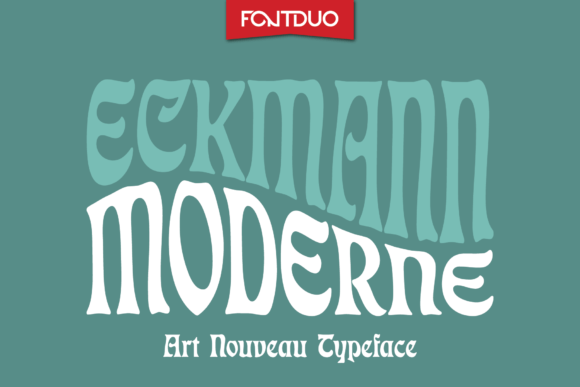
At its core, Eckmann Moderne is a meticulous revival of the iconic Eckmann-Schrift, originally designed by Otto Eckmann. The revival, known as Eckmann Moderne FD, doesn’t just copy the old forms; it thoughtfully updates them. The sinuous curves and decorative terminals that gave the original its character are all here, preserved with respect. Yet, subtle adjustments to letter spacing, weight distribution, and overall clarity make this premium font far more versatile. It’s no longer a relic for museum posters alone. It’s a living tool for contemporary creative projects.
The Personality of the Typeface: Where Organic Meets Refined
Understanding the visual personality of Eckmann Moderne is key to using it effectively. Imagine the graceful movement of a vine or the elegant curve of a violin’s scroll. That’s the spirit embedded in its letterforms. The strokes feel handcrafted, with a dynamic contrast between thick and thin that creates a natural rhythm. It’s a creative font with a distinct voice—sophisticated, artistic, and slightly romantic, without being overly frilly or illegible.
This personality makes it a powerful choice for projects that aim to convey craftsmanship, heritage, luxury, or artistic flair. It stands apart from the geometric precision of a sans serif font or the straightforward utility of many serif font options. Instead, it offers a unique blend of history and modernity. The updated Eckmann Moderne FD version particularly excels here, offering improved readability at smaller sizes and on screens, which was a challenge for many historic display faces.
Practical Applications: From Branding to Boutique Packaging
So, where does this elegant typeface truly shine? Its strength lies in applications where first impressions and brand perception are paramount. Think of it as a specialist tool in your design assets kit, not a workhorse for body text.
- Logo Design & Brand Identity: For brands in the wellness, beauty, artisanal food, boutique hospitality, or luxury craft sectors, Eckmann Moderne can form the cornerstone of a memorable brand identity. A logo set in this font immediately communicates a sense of timelessness, care, and artistic sensibility. Paired with a clean, modern sans serif font for supporting text, it creates a stunning and professional hierarchy.
- Packaging Design: This is a natural home for the font. Whether it’s a high-end tea label, a gourmet chocolate box, a cosmetic product, or a craft beer bottle, the typeface adds instant shelf appeal. Its ornamental charm suggests quality and attention to detail before the customer even reads the description.
- Editorial & Publishing: Use it for chapter headings in a novel, the title of a magazine feature on history or art, or the masthead of a literary journal. It sets a distinct, cultured tone that draws readers in. In editorial design, it works best as a headline font, contrasted with a highly legible body font.
- Digital & Social Media: Don’t relegate it to print. Eckmann Moderne can make social media graphics and website headers pop. It’s excellent for creating impactful hero text on a landing page, stylish Instagram quotes, or elegant YouTube thumbnails. Its refined curves ensure it looks sharp on high-resolution screens.
- Event & Stationery Design: Wedding invitations, gala programs, festival posters, and business cards for creative professionals all benefit from its sophisticated flair. It lends an air of occasion and importance to any printed piece.
Making It Work: Pairing, Hierarchy, and Licensing
Adopting a strong display font like this requires a strategic approach. Here’s how to integrate it successfully into your workflow.
Mastering Font Pairing
The golden rule with a decorative display font is balance. Eckmann Moderne is the star of the show; it needs a supportive cast. Pair it with a neutral, highly readable typeface for body copy. A simple sans serif font like Helvetica, Futura, or a modern grotesque often works beautifully, creating a clear contrast that enhances both fonts. For a more traditional feel, a classic book serif font like Garamond or Caslon can also work, but ensure there’s enough difference in style to avoid visual competition. Avoid pairing it with other highly stylized script font or handwritten font options, as this can quickly become chaotic.
Building Visual Hierarchy
Use Eckmann Moderne deliberately to establish hierarchy. It’s perfect for H1 headings, subheadings, pull quotes, or key logos. Use its weight variations (if available in the family) to create subtle levels of emphasis. The goal is to guide the viewer’s eye, using the font’s unique style to mark important information and create focal points, while letting simpler fonts handle the dense, informational text.
Evaluating Project Fit & Readability
Always test the font in context. Set your headline, then step back. Does the mood align with your message? Is the text instantly readable at the intended size? For digital use, check its performance on different screens. Its strength is in headlines and short bursts of text; it’s not designed for long paragraphs. Ensure you have a license that covers your intended use—whether for a personal blog, social media graphics for a client, or commercial font use in product packaging. A reputable premium font will provide clear licensing terms.
In a landscape saturated with minimalist and geometric typefaces, Eckmann Moderne