Konrad Kachelofen: A Renaissance Printer's Enduring Typographic Legacy
In the bustling world of 15th-century Leipzig, Konrad Kachelofen wasn't just a printer; he was a cultural hub. His shop was a unique blend of printing press, book store, and wine bar—a place where ideas and commerce mixed freely. This practical, multifaceted approach is mirrored in the typeface that bears his name. The Konrad Kachelofen font is more than a historical replica; it’s a tool designed for clarity and impact, perfect for modern creators who need their work to stand out with a touch of classical authority.
Visual Character and Style
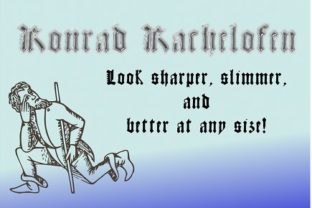
Based on a specific historical typeface from the Gesamtkatalog der Wiegendrucke (GW 510), the Konrad Kachelofen font carries the DNA of early Renaissance printing. It’s a serif font, but with a distinct personality. The major differences from its source material are intentional design choices for contemporary use. The lowercase letters are slimmer and more refined, allowing for better spacing and readability in extended text if needed. The uppercase letters, however, are where it truly shines, featuring different style glyphs that give it a sharper, clearer appearance.
This is not a font for body paragraphs. It’s a display font and a creative font built for prominence. Think of it as the typographic equivalent of a bold headline on a vintage poster or a chapter title in a beautifully bound book. Its strength lies at larger point values, where its crisp details and Renaissance flair can be fully appreciated. The overall appeal is one of informed craftsmanship—it feels historical without being dusty, authoritative without being rigid.
Strategic Applications for Modern Projects
So, where does a premium font like Konrad Kachelofen fit into your creative toolkit? Its versatility is found in its specialized use. For brand identity, it can lend an air of established credibility to a logo, especially for businesses in publishing, artisanal goods, consulting, or education. It signals heritage and expertise instantly.
In editorial design and packaging design, it excels as a title font. Imagine it on the cover of a historical novel, a specialty coffee bag, or a craft beer label. It commands attention and sets a specific tone. For web design and social media graphics, using Konrad Kachelofen for key headings or pull quotes can break the monotony of standard sans serif or script font pairings, adding a layer of intellectual sophistication to your visual hierarchy.
Practical Guidance for Implementation
Choosing the right typeface is a strategic decision. When evaluating Konrad Kachelofen for a project, consider the message you need to convey. Does your project require a connection to history, tradition, or meticulous craft? If so, it’s a strong candidate. Test it by setting your key headlines and observing how its character interacts with your chosen body copy font.
Font pairing is critical. Konrad Kachelofen’s old-style serifs and sharp details pair well with clean, neutral sans serif fonts for body text, creating a balanced contrast. It can also work with simpler serif fonts, provided there’s enough distinction in weight and style. Avoid pairing it with other highly decorative or handwritten fonts, as this can create visual clutter.
As with any commercial font, review the licensing carefully, especially if you plan to use it in logo design, on merchandise, or across multiple digital platforms. Check the included styles—does it have the weight variations or alternates you need? Always test readability in context: set a sample headline in your intended size and color scheme to ensure the sharp details remain clear on both screen and in print.
Konrad Kachelofen’s legacy was built on making knowledge accessible through a well-run press. The font named after him continues that tradition, offering a specialized design asset that brings historical gravitas and sharp clarity to modern typography. It’s a tool for creating standout titles, impactful logos, and memorable brand touchpoints. By using it where it excels—as a focused display face—you can inject a piece of printing history into your contemporary work, ensuring your headlines, like Kachelofen’s books, are both seen and remembered.