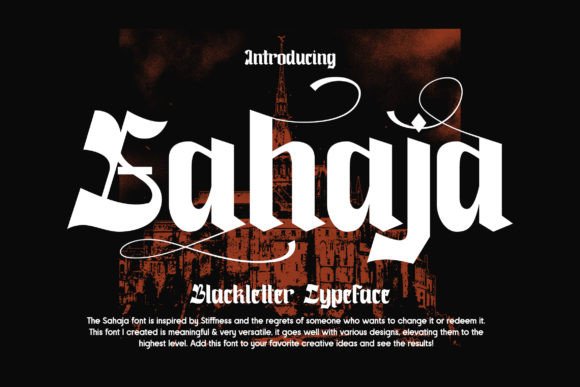
Sahaja: The Font Born from Stiffness and Redemption
A Typeface with a Story in Every Stroke
Every typeface carries a whisper of its origin story, but few wear their inspiration as openly as Sahaja. This isn't just another premium font; it's a visual narrative of tension and release. The design draws from a feeling of stiffness—that rigid, uncomfortable state of being stuck—and the profound, personal desire to move beyond it. The result is a serif font that balances structural integrity with a subtle, graceful flow. It’s the typographic equivalent of a deep exhale. The letterforms have a confident, grounded presence, yet their terminals and serifs carry a softening, an intentional break from pure rigidity. This duality gives Sahaja a unique personality: it feels both authoritative and approachable, traditional yet refreshingly modern.
Where Sahaja Truly Shines: Practical Applications
Understanding a font's soul is one thing; knowing where to deploy it is what matters for your projects. Sahaja’s versatility is its greatest strength. It’s a creative font built for real-world use, not just for showcasing in a specimen sheet.
For brand identity, Sahaja offers a compelling foundation. Imagine it on a boutique coffee bag, a wellness brand's packaging, or the header of a consultancy's website. Its character communicates thoughtfulness and a journey, which can deeply resonate with audiences valuing authenticity. It works exceptionally well for logo design where you need a wordmark with weight and meaning, avoiding the generic feel of many corporate sans serifs.
In editorial design and publishing, this typeface excels. Think of book titles, chapter headings, or pull quotes in a magazine. Its high legibility at larger sizes makes it perfect for creating a strong visual hierarchy. Pair it with a clean, neutral sans serif for body text, and you create an engaging reading experience that feels curated and professional.
The digital space is where its modernity comes alive. For web design, Sahaja can be the hero font for headlines, adding instant character to a homepage or a landing page. Its PUA encoding is a practical gift here—accessing unique glyphs and ligatures is as simple as clicking, allowing you to create distinctive typographic features without extra software hassle. This is invaluable for social media graphics where standing out is non-negotiable. A quote card or promotional banner using Sahaja will have an inherent artistic quality that generic fonts cannot match.
Making the Right Choice: Pairing and Practicality
Choosing a font like Sahaja is a strategic decision. Start by evaluating your project's core message. Is it about transformation, quiet confidence, or thoughtful craftsmanship? If yes, you’re on the right track. Its style bridges several categories—it has the weight of a display font but the elegance that can edge towards a sophisticated script font in its ligatures.
A crucial step is font pairing. Sahaja’s personality is strong, so it benefits from a partner that doesn’t compete. A geometric sans serif font like Montserrat or a simple humanist sans like Lato provides a clean counterpoint. For a more classic feel, pair it with a transitional serif. The key is contrast in style but harmony in weight and spacing.
Always test the font in context. Create a mock-up of your business card, website header, or product label. Check the readability of the specific words you’ll use. Look at the spacing (kerning) between problematic letter pairs like “Ty” or “WA.” Because Sahaja is a commercial font, ensure its license covers your intended use—whether for a client’s logo, a printed booklet, or a website template for sale.
Finally, explore the full package. A well-crafted modern typography asset like this often includes multiple weights (light, regular, bold, black) and styles (italic). These variations are not just extras; they are tools for building a complete typographic system for your brand identity or design assets library. Using a consistent family across all touchpoints—from a packaging design to an Instagram story—fosters recognition and professionalism.
Ultimately, Sahaja is more than a typeface. It’s a design tool with a built-in narrative. By incorporating it, you’re not just selecting a style; you’re infusing your work with a story of resilience and elegant change. Add it to your toolkit, and let it elevate your next creative idea from the ordinary to the meaningful.