Afterkilly: A Bold Brush Typeface for Impactful Designs
When you're crafting a visual identity, the font you choose carries more weight than you might think. It's not just about picking something that looks nice—it's about finding a typeface that communicates the right energy, fits your project's context, and holds up across different applications. Afterkilly is a brush typeface that brings a distinct handcrafted quality to the table, and it's worth understanding what it offers before you decide if it's the right fit for your next project.
What Makes Afterkilly Stand Out
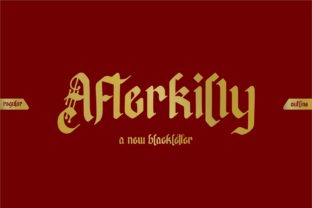
Afterkilly is a striking brush typeface designed to feel bold, expressive, and unmistakably hand-drawn. The letterforms carry the texture and movement of real brush strokes, which gives it an organic, energetic quality that's hard to replicate with cleaner geometric fonts. The uppercase letters feature stylistic alternates, meaning you can swap out certain characters for different versions to add variety and prevent repetition in your headlines or logos.
The overall personality of Afterkilly leans confident and creative. It's not trying to be subtle or understated. This is a typeface that wants to be noticed, and it works best in contexts where you need your text to make a statement. The brush texture adds warmth and authenticity—qualities that resonate with audiences who appreciate craftsmanship and individuality over corporate polish.
One important detail: Afterkilly also comes with a line version, which offers a cleaner, more structured interpretation of the same letterforms. However, the line version is designed specifically for pairing with other fonts, not for combining with the regular Afterkilly style. This distinction matters when you're planning your typographic hierarchy.
Where Afterkilly Works Best
This is fundamentally a display font, which means it's built for large-scale applications where readability at small sizes isn't a primary concern. Think posters, headlines, event banners, and hero sections on websites. The brush texture reads beautifully when the letters have room to breathe, but it can become muddy or illegible when reduced to body text sizes.
For branding and logo design, Afterkilly can be an excellent choice for businesses that want to project creativity, energy, and a personal touch. A handmade candle company, a boutique coffee roaster, a fitness brand with an edge, or a creative agency could all use this typeface to reinforce their brand identity. The stylistic alternates give you flexibility to customize your wordmark and make it feel truly unique.
In packaging design, the brush quality of Afterkilly works particularly well for products that emphasize artisanal production, natural ingredients, or handcrafted quality. Labels for specialty foods, craft beverages, cosmetics, or boutique products can benefit from the organic texture this typeface brings.
For social media graphics and digital content, Afterkilly can help your posts stand out in crowded feeds. Quote graphics, promotional announcements, sale banners, and event invitations all benefit from a creative font that commands attention. The bold brush strokes translate well to screen-based applications, especially when used at larger sizes.
Editorial design and publishing projects—particularly magazine covers, chapter headings in books, or feature article titles—can use Afterkilly to add visual interest and break up the monotony of standard typographic layouts. It pairs well with clean serif fonts or sans serif fonts for body text, creating a natural contrast between expressive headlines and readable paragraphs.
Understanding Font Pairing with Afterkilly
Effective font pairing is one of the most practical skills in modern typography. Afterkilly's bold, textured character means it needs a complementary partner that doesn't compete for attention. A clean, neutral sans serif like a geometric or grotesque style works well for body copy, letting the brush typeface dominate the headlines without visual clutter.
The included Afterkilly Line version gives you another option for creating hierarchy within your layouts. Since it shares the same underlying letter structure as the regular style but with a more refined, linear treatment, it can serve as a secondary accent font for subheadings or supporting text elements. Just remember the developer's note: use it for pairing with other fonts, not alongside Afterkilly Regular.
When testing pairings, set your headline in Afterkilly and your body text in a premium font with strong readability—something designed for extended reading. Check how the two styles interact at the actual sizes you'll be using. Look at the contrast in weight, texture, and mood. Good pairings feel balanced without being boring.
Practical Considerations Before You Commit
Before incorporating Afterkilly into a brand identity or commercial project, take time to evaluate a few things. First, test the font with your actual content. Type out the specific words and phrases you'll be using. Some letter combinations in brush fonts can create awkward spacing or visual conflicts, and the stylistic alternates give you options to work around these issues.
Check the licensing terms for your intended use. If you're working on a commercial project—whether that's a client's logo, a product line, or a paid publication—make sure you have the appropriate commercial font license. This is one of those details that's easy to overlook but can create real problems down the road.
Consider your audience and context honestly. Afterkilly works brilliantly for brands and projects that embrace creativity, energy, and a handmade aesthetic. It's less suited for projects that require a tone of authority, tradition, or clinical precision. A law firm's annual report probably isn't the right place for a brush typeface. A streetwear brand's lookbook absolutely could be.
Finally, think about consistency across your design assets. If you're building a brand system, Afterkilly should work harmoniously with your color palette, imagery style, and overall visual direction. Pull together a small mood board or style tile with the font applied to real content before finalizing your decision.
Final Thoughts on Working with Afterkilly
Choosing the right typeface is ultimately about fit—fit with your message, your audience, and your visual context. Afterkilly is a strong option when you need a display font with genuine character and handcrafted appeal. Its brush texture, stylistic alternates, and companion line version give you enough versatility to work across web design, print, packaging design, and social media graphics without feeling repetitive.
Use it where it shines—large, expressive applications where its personality can come through—and pair it thoughtfully with more restrained fonts for body text. Test it with your real content, verify the licensing, and you'll have a valuable addition to your typographic toolkit.