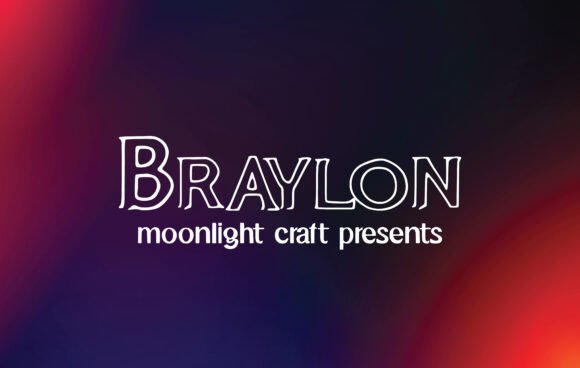
Braylon: A Handwritten Font for Modern Branding
There’s a certain kind of design project that demands more than just legibility. It needs a voice. You know the ones—a boutique bakery’s logo, a wedding invitation suite, a lifestyle blogger’s Instagram quote graphic. For these, a standard sans serif feels too corporate, and a formal serif too stiff. This is the space where a thoughtfully crafted handwritten font like Braylon comes into its own. It’s not trying to mimic a quick, messy scrawl. Instead, Braylon offers a refined, flowing script that feels both personal and polished, making it a versatile creative font for a wide range of applications.
Understanding Braylon’s Visual Character
At first glance, Braylon presents itself with a confident, yet approachable elegance. The letterforms are connected in a continuous, flowing rhythm, but each character retains a clear definition. This balance is crucial. It avoids the illegibility that can plague some script fonts while maintaining that essential handcrafted feel. The strokes have a natural, subtle variation in thickness, giving the typeface a sense of movement and authenticity that digital uniformity often lacks. It’s a modern typography take on a classic script style, making it feel current rather than nostalgic.
Think of it as the difference between a hastily scribbled note and a beautifully penned signature. Braylon is the latter. Its personality strikes a chord between romantic and confident, whimsical and structured. This duality is what makes it such a powerful tool. It can convey heartfelt sincerity for a non-profit’s campaign or sophisticated charm for a high-end product label. As a display font, its primary role is to draw the eye and set a tone, and Braylon does this with a graceful authority.
Where Braylon Truly Shines: Practical Applications
Knowing a font’s aesthetic is one thing; understanding where to deploy it is where the real design work happens. Braylon’s strength lies in contexts where a human touch is paramount. It’s a natural fit for logo design, especially for brands in the lifestyle, wellness, beauty, or artisanal food spaces. A logo set in Braylon immediately communicates a story of craftsmanship and care, forming the cornerstone of a memorable brand identity.
Beyond logos, its utility extends across the entire spectrum of design assets. Consider its role in:
- Editorial Design & Publishing: Use it for chapter headings in a cookbook, pull quotes in a magazine layout, or the title page of a memoir. It adds a layer of intimacy and artistry that standard serif fonts or sans serif fonts cannot.
- Packaging Design: On a craft beer label, a candle jar, or a box of artisanal chocolates, Braylon can elevate the perceived value and reinforce the product’s story.
- Digital & Social Media: For web design, it’s best used sparingly—think hero section headlines or call-to-action buttons where a burst of personality is needed. It excels in social media graphics, making quote cards, promotional announcements, and Instagram story highlights feel more personal and engaging.
- Personal & Commercial Projects: From wedding stationery and greeting cards to Etsy shop banners and digital planners, Braylon provides a premium font quality that can make personal projects feel professional and commercial projects feel bespoke.
Making Braylon Work: A Designer’s Practical Guide
Choosing a beautiful font is only the first step. Integrating it effectively is what separates good design from great design. Here’s how to approach working with Braylon in your projects.
Evaluate the Project Fit: Before you even install the font, ask yourself: does this project’s message align with a handwritten aesthetic? A law firm’s annual report? Probably not. A yoga studio’s new class schedule? Perfect. The font should amplify the content’s inherent personality, not contradict it.
Master the Font Pairing: This is perhaps the most critical practical step. A flowing script like Braylon can overwhelm a page if used for body text. Its true power is unlocked when paired with a clean, neutral companion. Try combining it with a simple serif font like Lora or Playfair Display for a classic, elegant contrast. Alternatively, a geometric sans serif font such as Montserrat or Raleway can create a striking, contemporary balance. The key is to let Braylon be the star of the show for headlines and key phrases, while the supporting font handles longer, readable paragraphs.
Test for Readability and Hierarchy: Always test the font at the size it will be used. A phrase that looks magnificent at 72pt on your screen might become an unreadable squiggle at 24pt on a mobile device. Use Braylon to establish a strong visual hierarchy—pulling the reader’s eye to the most important message first. Its inherent style does a lot of this work for you, but mindful placement is still essential.
Review the Included Styles & Licensing: A quality commercial font like Braylon often comes with more than just the basic letters. Check for stylistic alternates, ligatures, and swashes. These extras can add unique flair to specific letter combinations, making your design even more distinctive. Crucially, always verify the licensing. Ensure it covers your intended use—whether for personal projects, client work, or commercial products—to avoid any legal issues down the line. A premium font is an investment, and understanding its terms is part of using it professionally.
In the end, fonts like Braylon are more than just a collection of glyphs; they are tools for storytelling. By understanding its character, knowing its best applications, and applying it with thoughtful design principles, you can harness its potential to create work that doesn’t just look good, but feels right. It’s about choosing the right voice for your visual message, and sometimes, that voice is beautifully, confidently handwritten.