Centennial: Breathing New Life into a 19th-Century Typeface
When you work in design long enough, you realize that every typeface has a story. Some are born in the sterile environments of modern software, while others carry the dust and grit of history on their serifs. Centennial belongs firmly in the latter category. It is a fascinating piece of typographic history, originally crafted by Hermann Ihlenburg in 1876 for the MacKellar, Smiths & Jordan type foundry. This wasn't just a font; it was a statement of the Victorian era—ornate, bold, and unapologetically decorative.
However, reviving a font from the 1800s for modern use presents a unique challenge. The original designs were often created for large headlines on posters or billboards, lacking the versatility needed for today’s diverse media. This is where the Intellecta digitization comes in. Recognizing the beauty of Ihlenburg’s original uppercase forms but understanding the limitations of the full historical set, the designers took a creative approach. They digitized the striking uppercase of Centennial and paired it with the lowercase set of another classic, Pentagraph. The result is a hybrid premium font that feels both nostalgic and usable, bridging the gap between the heavy, decorative Victorian style and more readable text faces.
The Visual Personality: Ornate Meets Structured
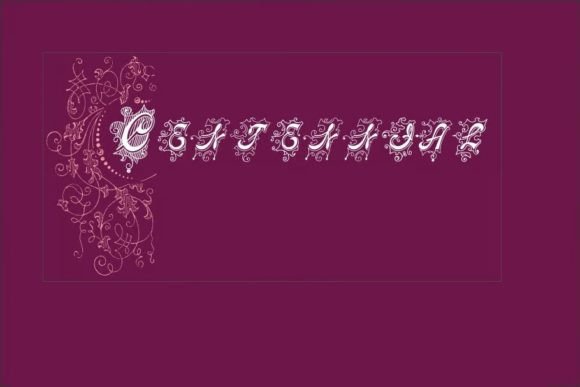
Understanding the visual rhythm of Centennial is key to using it effectively. As a serif font, it carries the weight and authority of its 19th-century origins. The uppercase letters are the real showstoppers here. They feature high contrast between thick and thin strokes, along with decorative "spurs" and wedge-like serifs that give the text a very textured, almost three-dimensional appearance. It feels heavy and grounded, making it an excellent display font for situations where you need to command attention immediately.
The lowercase characters, inherited from Pentagraph, soften this intensity. They provide a more rhythmic flow that makes longer strings of text—like a tagline or a subtitle—much easier to read than if they were set entirely in the ornate uppercase. This combination creates a distinct personality: it is authoritative yet approachable. It avoids the stiffness of modern geometric typefaces while steering clear of the chaotic illegibility sometimes found in overly decorative vintage revivals.
Strategic Applications: Where Centennial Shines
For designers, entrepreneurs, and content creators, the question is never just "does this look cool?" but "does this solve a problem?" Centennial excels in scenarios where you need to establish a sense of heritage, craftsmanship, or established trust. It is a creative font that works beautifully for specific niches.
Branding and Logo Design: If you are building a brand identity for a brewery, a boutique law firm, a high-end leather goods shop, or a historical society, Centennial is a strong contender. Its Victorian roots suggest permanence and quality. Using the uppercase for a wordmark can instantly communicate that a brand is "established," even if the business just launched last week.
Editorial and Publishing: In editorial design, such as magazine covers or book dust jackets, this typeface shines. It pairs exceptionally well with clean, modern photography. The contrast between the old-world typography and a crisp, contemporary image creates a dynamic visual tension that draws the eye. It is particularly effective for headlines related to culture, history, or luxury lifestyle.
Packaging and Print: In packaging design, texture is everything. The detailed strokes of Centennial translate beautifully to embossed labels, foil stamping, or thick card stock. It gives physical products a tactile quality that cheap, generic fonts cannot replicate. Think coffee bags, artisanal chocolate wrappers, or vintage-style apothecary labels.
Mastering the Pairing Game
One of the most common mistakes with ornate display fonts is isolation. If you set an entire poster in Centennial, the visual noise becomes overwhelming. The secret to unlocking its potential lies in font pairing.
Because Centennial has such a strong personality, it demands a quiet partner. You need a sans serif font or a very neutral serif font to act as the supporting cast. A clean sans serif with generous spacing works wonders for body copy, allowing the headlines set in Centennial to pop without competing for attention.
For example, imagine a wedding invitation suite. You might use Centennial for the couple's names to add a touch of romantic grandeur, but switch to a light, spaced-out sans serif for the venue details and RSVP information. This ensures readability while maintaining the elegant atmosphere. Similarly, in web design, using Centennial for the H1 or H2 headers can break the monotony of standard web-safe fonts, provided the paragraph text remains legible and simple.
Practical Considerations for Modern Projects
Before integrating Centennial into your next project, there are a few practical realities to consider. This is a commercial font, meaning you need to ensure your licensing covers your specific usage, whether it's for a client’s logo, a run of t-shirts, or a digital template.
Furthermore, because this digitization focuses on the uppercase for the primary stylistic impact, you should view it primarily as a headline or accent typeface. It is not designed for body text; the intricate details of the uppercase letters would create visual fatigue if used for long paragraphs.
Test your pairings on different screens and in print. A font with this much detail can sometimes get muddy on low-resolution mobile screens. Ensure you have adequate contrast and size so the character of the typeface remains clear. By respecting the history of Ihlenburg’s original design and applying it with modern restraint, you can use Centennial to add a layer of depth and storytelling to your design assets that generic, modern typefaces often lack.